
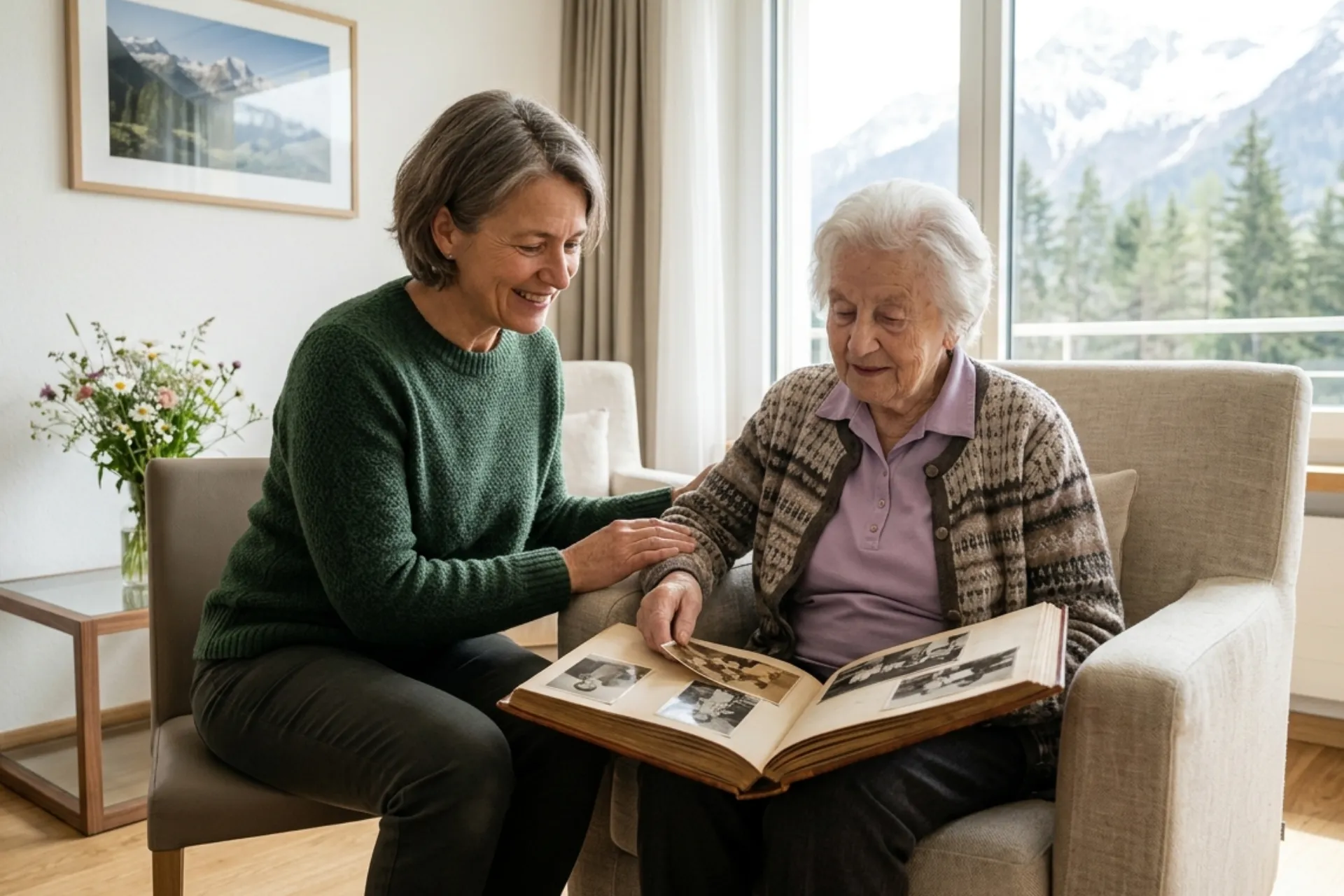
A stay in a clinic or institution changes more than a person’s location. It can interrupt familiar rhythms, reduce spontaneous contact and place everyday choices inside a new environment. Even when professional care is excellent, the hours between appointments may feel long.
Human presence reconnects the experience to the person. It creates room for conversation, reassurance, shared attention and continuity with life beyond the institution. Companionship does not treat illness; its value lies in social connection, dignity and the feeling of being seen as an individual.
A need that deserves attention in Switzerland
The importance of connection becomes particularly visible in later life. Pro Senectute Switzerland reported on 29 September 2024 that approximately 37% of people aged 85 and over experience loneliness, representing around 90,000 people. The figure does not mean that every older person entering an institution is lonely, and it should never be used to diagnose an individual. It does show why meaningful human connection deserves deliberate attention.
A temporary clinic stay can intensify feelings of disconnection. The person may be away from familiar surroundings, family visits may be limited and everyday social contact can depend on the institution’s schedule. A carefully matched companion can add relational continuity without changing the responsibilities of the clinical team.
| Presence is not about filling silence. It is about ensuring that a person does not disappear behind the organisation of their care. |
What presence can change
Presence does not need to be dramatic to matter. Its value is often found in small, repeated moments: being greeted by someone familiar, having time to finish a story, looking through photographs, listening to music or sharing a quiet cup of tea where permitted.
- It gives the person unhurried attention outside clinical interactions.
- It creates continuity when relatives cannot be present every day.
- It helps preserve language, interests and personal reference points.
- It can make it easier for the person to express preferences and everyday concerns.
- It gives families a clearer, agreed rhythm for non-medical communication.
Presence is relational, not performative
Effective companionship is not constant activity. Some people want conversation; others need calm. Some enjoy reading or a permitted walk; others value a familiar face and quiet attention. The companion must listen and adapt without imposing a programme.
This is why compatibility matters. Language, temperament, cultural sensitivity and respect for boundaries may be as important as experience. A technically impressive profile can still feel intrusive if the person’s preferred rhythm is overlooked.
Different people need different forms of presence
A sociable person may value lively conversation and shared activities. Someone who becomes tired easily may prefer shorter, quieter visits. A person living with cognitive changes may find comfort in repetition and familiar cues, but the companion must still avoid clinical claims and follow the institution’s guidance. Personalisation begins with observation, consent and respect.
What families often carry
Relatives may feel responsible for being available at all times, even when work, children, distance or their own health makes this impossible. The result can be a difficult mixture of worry, guilt and logistical pressure. Additional support does not replace the family relationship. It can make the situation more sustainable and allow family visits to focus on connection rather than monitoring every detail.
Communication should be agreed in advance. The person receiving support remains central. Families and Curis+ should clarify who may receive updates, how often and what may be shared. A companion should never become an informal source of medical reporting.
Respecting the institutional environment
Private support must fit around the clinic or institution. The companion follows site rules, protects confidentiality and refers medical concerns to responsible professionals. Good support adds continuity without creating parallel clinical authority.
Before the arrangement begins, practical questions should be settled: access, timing, permitted activities, infection-control requirements, mobility rules and the correct escalation contact. This preparation helps the companion focus on the relationship once present.
How to know whether the arrangement is working
- The person appears comfortable with the companion and can express preferences freely.
- The agreed rhythm is reliable without feeling rigid or intrusive.
- The family receives appropriate reassurance within clear consent boundaries.
- The companion works respectfully with the institution and escalates concerns correctly.
- Curis+ remains available for feedback and adjustment.
Human presence cannot remove every difficulty. It can, however, protect something essential: the person’s sense of connection, identity and place in the lives of others.